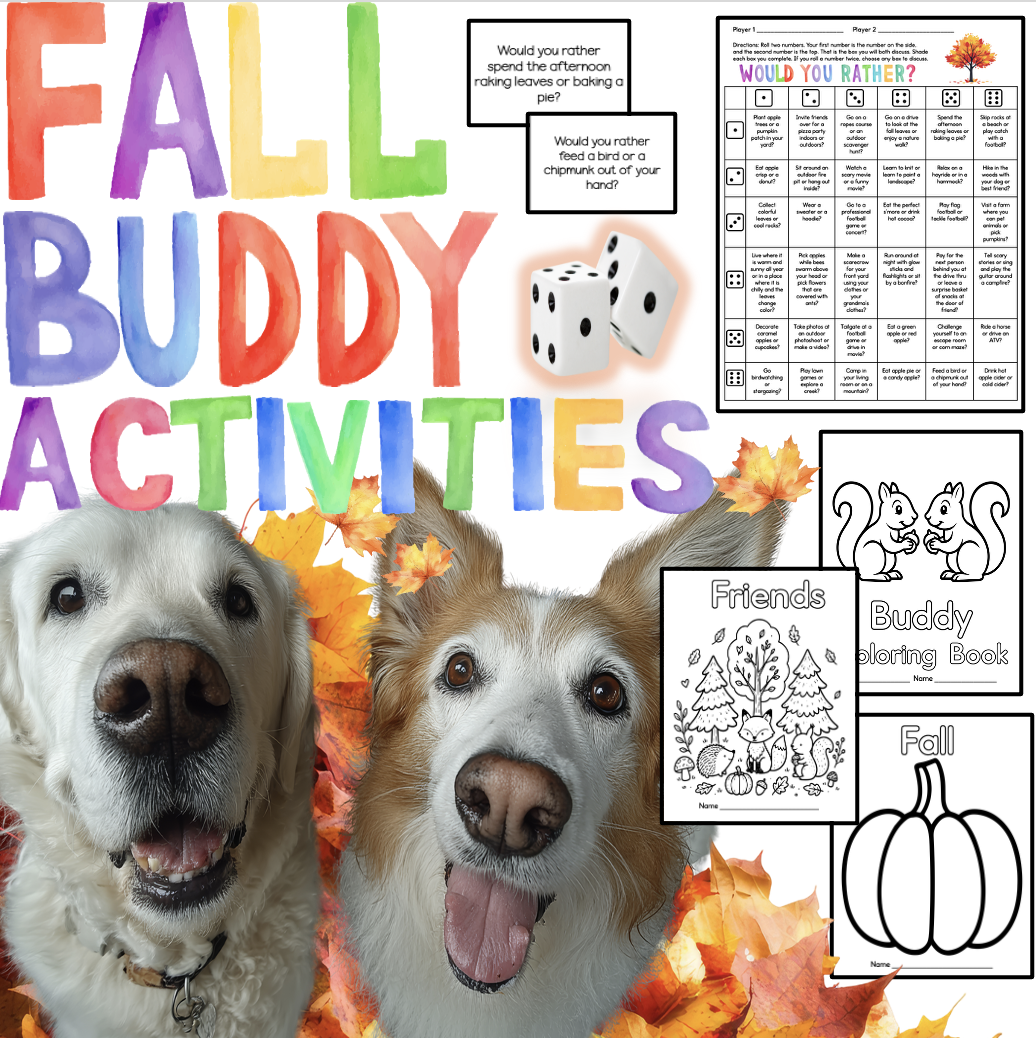
Fall is a wonderful time for Big Buddies and Little Buddies to get to know each other, build friendships, and enjoy creative activities together! From pumpkin patch coloring pages to fall Would You Rather dice games, there are so many fun ways for older and younger students to connect while developing important social-emotional learning (SEL) skills.
When Big Buddies and Little Buddies work together, they have opportunities to practice communication, kindness, patience, and teamwork. Simple activities give students a reason to talk, share their interests, help one another, and discover what they have in common.
Fall buddy activities for elementary students are especially engaging because they combine familiar autumn themes with opportunities for conversation and creativity. Students can answer fall get-to-know-you questions, play a Would You Rather dice game, or create their own fall coloring books filled with pumpkins, scarecrows, acorns, leaves, and fall animals.
Whether you are planning a school buddy program, looking for fall SEL activities, or searching for ways to build classroom community, these activities make it easy to bring students together!

Save 50% on this Buddy Bundle!
Why Fall Is a Great Time for Big Buddy and Little Buddy Activities
Getting to know a new buddy takes time. Students need opportunities to ask questions, share information about themselves, and learn how to interact comfortably with someone new.
Fall provides a fun theme for these early connections. Students can talk about pumpkins, favorite fall activities, animals, and other autumn interests while participating in activities that give them something to do together.
These Big Buddy and Little Buddy activities help make conversations feel natural. Instead of asking students to sit and talk without a starting point, teachers can provide question cards, games, and coloring pages that encourage interaction.
Older students often enjoy taking on a leadership role when they work with younger buddies. They can ask questions, help explain game directions, assist with coloring, and support cutting and pasting when needed.
Younger students benefit from having an older partner who encourages them to participate and share their ideas. Both students get opportunities to practice communication, cooperation, and kindness.
The relationships formed through these small interactions can continue to grow throughout the school year.


1. Fall Get-to-Know-You Activities for Big Buddies and Little Buddies
One of the best ways to start a buddy relationship is with simple get-to-know-you activities.
Kids love asking questions about one another. They want to know about favorite foods, animals, activities, and things their buddies enjoy. These conversations help students discover common interests and begin building a connection.
Fall-themed questions make these conversations even more engaging.
Ways to use fall get-to-know-you question cards
- Have buddies take turns selecting a question card.
- Encourage students to ask and answer questions about their interests.
- Invite partners to ask follow-up questions when they learn something interesting.
- Let older buddies model taking turns and listening carefully.
- Encourage students to share something new they learned about their buddy.
These fall get-to-know-you activities for students provide a comfortable starting point for conversations. They also help students practice listening, expressing themselves, and showing interest in another person’s answers.
Getting to know a buddy does not need to happen in one meeting. Returning to questions and conversation activities gives students more opportunities to discover shared interests and develop a stronger relationship.

Buddy Activities for Every Season!


2. Fall Would You Rather Dice Games for Buddy Partners
Looking for an engaging way to get Big Buddies and Little Buddies talking? A fall Would You Rather dice game is a fun choice!
Would You Rather questions give students two options and invite them to choose their favorite. The fall theme creates opportunities to talk about pumpkins, autumn activities, animals, and other seasonal interests.
The dice add an interactive element. Students roll the dice and use the numbers to find the corresponding question. Then they ask their buddy the question and share their answers.
How to play a fall buddy dice game
- Have buddy partners sit together with the fall dice game.
- One student rolls the dice.
- Students use the numbers rolled to locate the matching question.
- The student asks the question, and the buddy answers.
- Switch roles and continue playing.
The game gives students a clear way to start conversations, even if they are still getting comfortable with each other.

How fall Would You Rather games support SEL
Communication: Students practice asking questions, answering clearly, and explaining their choices.
Listening: Buddies learn to pay attention to their partners’ answers and respect different opinions.
Relationship building: Students discover shared interests and learn new things about each other.
Confidence: Having a question to answer can make it easier for students to participate in a conversation.
Turn-taking: Rolling the dice and taking turns asking questions gives students a simple structure for cooperating.
These fall Would You Rather activities for elementary students can be used during buddy meetings, classroom community-building activities, or small-group interactions.

Buddy Activities for The Year!


3. Pumpkin Patch Coloring Pages for Fall Buddy Activities
Pumpkin patch coloring pages are a fun way for Big Buddies and Little Buddies to spend time together while getting to know one another.
Coloring gives students a shared activity without requiring constant conversation. They can talk naturally as they work, share color choices, and help each other when needed.
Pumpkin-themed coloring pages are especially appealing for fall buddy meetings because they fit the autumn theme and give students a creative way to participate.
Ways to use pumpkin patch coloring pages
- Let each buddy choose a pumpkin patch coloring page.
- Encourage students to talk about their favorite colors and designs.
- Invite buddies to help each other with coloring or cutting and pasting.
- Ask students to describe their finished pictures.
- Combine pumpkin coloring pages with fall get-to-know-you questions.
These fall coloring activities for elementary students are flexible enough for different ages and abilities. Older students can offer help and encouragement, while younger students can make their own creative choices.
The goal is not to have every picture look the same. It is to give students a chance to create together and enjoy the process.
4. Create a Fall Buddy Coloring Book
One of the easiest ways to turn several fall coloring pages into a meaningful buddy activity is to create a coloring book.
A fall buddy coloring book can include a fall-themed cover sheet along with coloring pages featuring pumpkins, scarecrows, acorns, leaves, and fall animals.
Students can choose their favorite pictures, color the pages, and help assemble their books. Older buddies can assist younger students with organizing the pages, cutting, or putting the book together.
How to make a fall buddy coloring book
Step 1: Choose a fall cover. Let students select or color a cover sheet for their book.
Step 2: Pick the coloring pages. Include a variety of fall designs, such as pumpkins, scarecrows, acorns, leaves, and autumn animals.
Step 3: Color together. Buddy partners can work on their own pages while sharing ideas and enjoying conversation.
Step 4: Assemble the book. Students can organize the pages and help put their coloring books together.
Step 5: Share the finished books. Invite buddies to show their favorite pages and explain their creative choices.
A fall coloring book activity for kids provides opportunities for collaboration, creativity, and fine-motor practice. It also gives buddy partners a shared project they can work on together.
Because the pages are not limited to one specific holiday, the coloring books can be enjoyed throughout the fall.

Thanksgiving Buddy Activities!
5. Scarecrow, Acorn, Leaf, and Fall Animal Coloring Activities
Pumpkins are not the only way to bring fall fun into your buddy program! Scarecrow, acorn, leaf, and fall animal coloring pages provide even more opportunities for creative interaction.
Offering a variety of designs allows students to choose pictures that interest them. One student might love coloring a scarecrow, while another prefers fall leaves or animals.
These choices can become conversation starters.
Students might discuss their favorite animals, compare their coloring designs, or explain why they chose particular colors. Older buddies can help younger students with materials while encouraging them to make their own decisions.
Make coloring more interactive
Try adding a simple conversation prompt to your coloring activity:
- Which fall picture is your favorite?
- What colors did you choose, and why?
- Which animal would you like to learn more about?
- What would you add to your picture?
- What is something you and your buddy both enjoy?
These prompts combine fall coloring pages and social-emotional learning by encouraging students to share their ideas and learn about their partners.
Coloring activities also provide a quieter option for students who may prefer creating alongside a buddy rather than participating in a game.

Save 50% on this Buddy Bundle!
6. The Benefits of SEL Through Big Buddy and Little Buddy Activities
Social-emotional learning helps students develop skills for understanding themselves, interacting with others, and building positive relationships.
Big Buddy and Little Buddy activities provide natural opportunities to practice these skills. Students can learn through conversation, shared creative projects, and simple games.
Relationship skills
Question cards and Would You Rather games encourage students to communicate, listen, and find common interests. These interactions help buddies become more comfortable with one another.
Social awareness
When students hear their buddies’ answers, they learn that other people may have different preferences, experiences, and ideas. They can practice showing interest and respecting differences.
Self-expression
Students can express themselves through their answers, color choices, and creative decisions. These opportunities help them share their interests and communicate their thoughts.
Responsible decision-making
Choosing a coloring page, selecting colors, and deciding how to complete a shared project give students opportunities to make choices and consider their partners’ ideas.
Empathy and kindness
Older students can practice offering help, being patient, and encouraging younger buddies. Younger students can experience support and inclusion while contributing their own ideas.
These skills grow through repeated interactions. Fall buddy activities provide a fun way to begin building positive habits that students can continue practicing throughout the school year.

Save 50% on this Buddy Bundle!
7. Plan a Fall Buddy Activity Day
If you are organizing a Big Buddy and Little Buddy program, you can combine these resources into a simple fall activity day.
Set up a few activity choices so students can interact in different ways.
Ask: Use fall get-to-know-you question cards to start conversations.
Play: Try a fall Would You Rather dice game for interactive question-and-answer fun.
Color: Offer pumpkin patch, scarecrow, acorn, leaf, and fall animal coloring pages.
Create: Have buddy partners assemble a fall coloring book using a cover sheet and their favorite pages.
You can have students rotate between activities or focus on one activity during each meeting. The important part is giving buddies enough time to interact without feeling rushed.
A mixture of games and coloring activities is especially helpful because students have different preferences. Some enjoy answering questions and explaining their opinions, while others feel most comfortable talking as they color.
By providing different ways to participate, you create more opportunities for students to connect.

Thanksgiving Buddy Activivities!
Build Strong Buddy Relationships That Last All Year
Fall is a wonderful time to help Big Buddies and Little Buddies establish the relationships that can continue throughout the school year.
Get-to-know-you question cards give students a reason to start talking. Fall Would You Rather dice games make conversations playful and interactive. Pumpkin patch, scarecrow, acorn, leaf, and fall animal coloring pages give buddies opportunities to create together.
These activities may seem simple, but they create meaningful opportunities to practice communication, cooperation, kindness, and other social-emotional learning skills.
When older and younger students spend time together, they can learn to appreciate one another, share their interests, and become more comfortable working as a team.
Ready to bring fall fun to your buddy program? Explore fall get-to-know-you question cards, a Would You Rather dice game, and a collection of fall coloring pages that can be assembled into a buddy coloring book. These resources make it easy to combine seasonal creativity with SEL and relationship building for Big Buddies and Little Buddies.