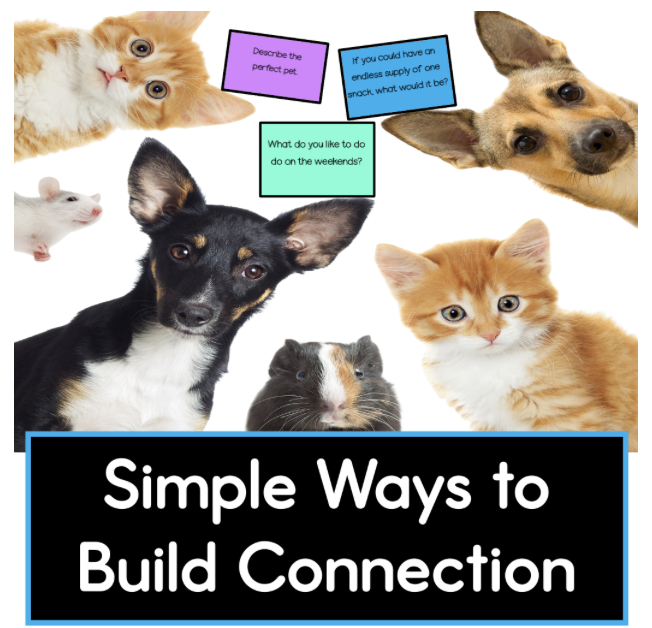
Some of the most important learning that happens in our classrooms isn’t found in the curriculum. It’s friendship.
Every day, our students are learning things that don’t always show up on a scope and sequence. They’re learning how to introduce themselves, invite someone to join a game, work through a disagreement, celebrate someone else’s success, listen, include others, and hopefully, be a good friend.
These skills matter. And while some students seem to figure out friendships naturally, others need a little encouragement along the way. That’s one of the things I love about teaching—we have so many little opportunities throughout the day to help students connect with one another without adding another big lesson to an already-full teaching schedule.
Sometimes, it’s simply about creating the opportunity.
Friendships Don’t Always Happen on Their Own
Have you ever watched a group of students and noticed that some of them seem to find their people immediately? They walk into the classroom, find a friend, and start chatting, while another student might be standing nearby, hoping someone will invite them to join.
It’s easy to think that students will naturally figure out friendships on their own. Sometimes they do, but sometimes they need a little help getting started.
A student may not know how to approach someone new. Another may be nervous about saying the wrong thing. Someone else may have a difficult time finding something they have in common with their classmates.
That’s where simple classroom activities can make a difference. When we intentionally create opportunities for students to talk and work with different classmates, we’re giving them a chance to practice those skills in a comfortable setting.
And sometimes, all it takes is one conversation.
Create Opportunities for Students to Talk
One of my favorite ways to encourage classroom connections is simply to give students something to talk about. It sounds almost too easy, doesn’t it?
But think about how often students are asked to work together without being given much opportunity to actually get to know one another. Partner work begins, a group project starts, and suddenly students are expected to communicate, compromise, share ideas, and work together.
Those are big expectations!
Giving students opportunities to practice communication in lower-pressure situations can help make those academic partnerships feel much more natural. A fun question can be enough to get things started, while a simple partner activity gives students a reason to talk to someone they might not normally choose.
A team-building game can help students discover something they have in common. And sometimes, those little moments become the beginning of a friendship.

Try Thoughtful Partner Pairings
Another simple way to encourage friendships is to think intentionally about who students work with. I’m not saying you need to carefully orchestrate every partnership. That would be exhausting!
But every once in a while, it’s fun to mix things up. Let students work with someone they don’t normally choose, or give them a chance to talk with someone new.
You never know what might happen.
Maybe two students discover they both love the same sport. Maybe they realize they both have a pet at home. Maybe they discover that they both think the same Would You Rather question is absolutely ridiculous.
Those little discoveries are important. They give students something to talk about, and once students have something to talk about, connecting becomes a whole lot easier.
Use Activities That Make Conversation Easy
Sometimes the hardest part of talking to someone new is figuring out what to say. That’s why I love activities that provide a little structure.
Students don’t have to walk up to a classmate and come up with a brilliant conversation starter. You’ve already given them one.
“Would you rather…?”
Now they have something to answer. They can explain their choice, their partner can share theirs, and they might disagree, laugh, or ask, “Why?”
And suddenly, they’re having a conversation.
That’s the magic of a simple activity. It takes away some of the awkwardness and gives students an easy way to connect.
If you’d like to try this with your students, my Would You Rather Partner Games are designed to give students those easy opportunities to talk, laugh, and get to know one another.

Help Students Think About What Makes a Good Friend
Sometimes it’s helpful to go beyond simply giving students opportunities to interact and talk about friendship directly.
What does it actually mean to be a good friend? What does kindness look like? How do we show someone we’re listening? What can we do when we disagree? How can we make sure someone feels included?
These conversations can be especially helpful because students don’t always realize that friendship involves skills. Being a good friend isn’t just something you’re either good at or you’re not. It’s something we can practice, and the classroom is a wonderful place to practice.
For older students, activities focused on friendship vocabulary can also give them the words they need to talk about relationships, kindness, communication, and social-emotional skills.
My Qualities of a Friend Vocabulary Activities and Puzzles are one resource I created for this purpose, especially for students in grades 4–12.

Don’t Underestimate the Small Moments
I think this is probably my favorite part of all of this. We don’t always know which moment is going to matter.
You might think you’re simply doing a quick partner activity, but for one student, it might be the first time they realize they have something in common with someone else. You might pair two students together for a five-minute activity, and suddenly they discover they both love drawing.
You might give your class a silly question to discuss, and one student who rarely talks suddenly has everyone laughing.
We don’t always get to see the long-term impact of those moments. But that doesn’t mean they aren’t important.
For some students, one simple conversation really can be the beginning of a friendship. And sometimes those friendships make school feel a little easier, a little happier, and a whole lot more fun.
You Don’t Have to Add Another Big Lesson
I know teachers have plenty on their plates. The idea of adding “friendship lessons” to everything else you’re already responsible for probably isn’t very appealing!
But that’s not really what I’m suggesting.
Instead, look for little opportunities that are already there. When students need a partner, mix things up. When you have a few extra minutes, give them a question to discuss. When you’re planning a team activity, think about how students can interact with classmates they don’t normally work with.
And when a friendship challenge comes up, use it as an opportunity to talk about what good friends do.
It doesn’t have to be complicated. Sometimes the simplest activities create the best conversations, and those conversations are where the magic happens.
A Few Easy Friendship-Building Activities to Try
If you’re looking for a few simple ways to encourage more conversation and connection in your classroom, here are two places I’d start.
A fun way for students to move around, talk to different classmates, and discover things they have in common –
Find a Friend Bingo -Grades Kindergarten-5:

Qualities of a Friend Vocabulary Activities & Puzzles – Grades 3–12

You don’t need a complicated program or hours of extra planning to start creating more opportunities for connection. Sometimes it’s a question, sometimes it’s a partner activity, and sometimes it’s simply noticing a student who could use a little encouragement to join in.
Those small moments matter.
Because we’re not only teaching students how to read, write, solve problems, and understand the curriculum. We’re also helping them learn how to be part of a community.
And sometimes, the smallest moments end up making the biggest difference.
Happy teaching! 💜
Katie