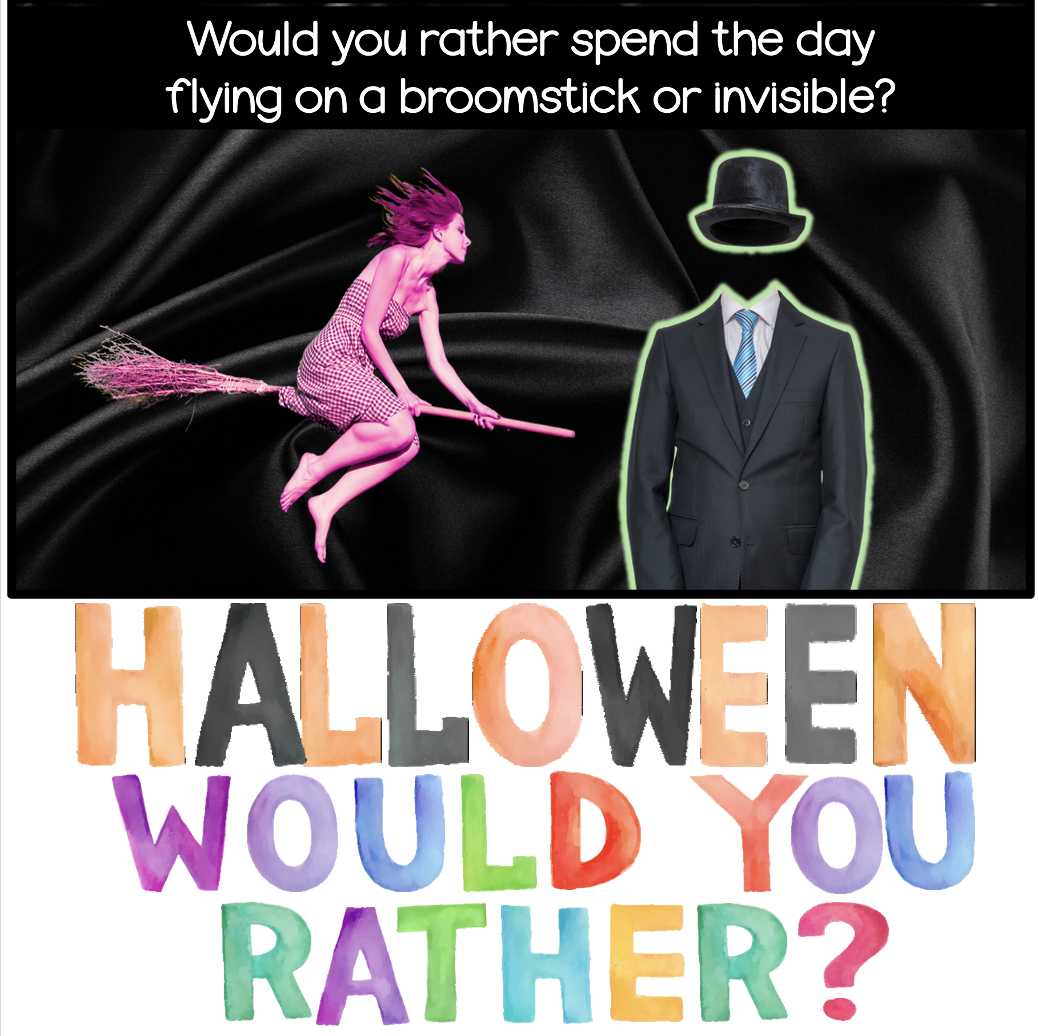
Halloween is a natural time to get elementary students talking, sharing ideas, and having fun with their classmates. But those conversations can also become the starting point for meaningful writing instruction. Would You Rather questions are especially effective for opinion writing because they give students an immediate choice, a clear topic, and a reason to explain what they think.
Instead of asking students to stare at a blank page and decide what opinion they might write about, a Would You Rather prompt gives them something to react to. They make a choice, think about their reasoning, listen to other perspectives, and then have the foundation they need to turn their ideas into writing. Halloween makes the experience even more engaging because the theme is naturally fun and familiar to elementary students.


Why Would You Rather Works So Well for Opinion Writing
One of the biggest challenges with teaching opinion writing is helping students come up with something to say. A blank page can feel overwhelming, especially for younger writers who may understand how to state an opinion but struggle to develop one. Would You Rather removes that first obstacle by giving students two clear options and an immediate reason to make a decision.
The question itself creates the opinion. Students have to choose one option, but the real writing opportunity comes from asking them to explain why they made that choice. That simple transition from “I choose this” to “I choose this because…” gives students a natural starting point for developing an opinion and supporting it with reasons.
Halloween is particularly useful because students already have plenty of background knowledge and personal reactions to Halloween-themed topics. They can draw on their own experiences, preferences, and imaginations when deciding which option they would choose. This means the teacher can spend less time explaining the topic and more time helping students develop stronger opinions and reasons.


Start With Conversation Before Asking Students to Write
Would You Rather is powerful because it doesn’t have to begin as a writing activity. Before students ever pick up a pencil, they can talk through their ideas with a partner, in a small group, or as an entire class.
That conversation gives students an opportunity to hear different opinions before they write their own. When a student discovers that a classmate chose a different option and has a completely different reason, it can help them think more deeply about their own choice and consider whether they have another reason to add.
This is one of the reasons Would You Rather works so well as a classroom discussion prompt. Everyone has an answer. Everyone has an opportunity to share. Students aren’t waiting for the teacher to call on the few children who always volunteer because every student has already made a choice.


Would You Rather Gives Every Student Something to Write About
Opinion writing becomes much easier when students already have an idea in their heads. A Would You Rather prompt gives every student an opinion before they begin writing, which means they aren’t spending their writing time trying to invent a topic.
Once students make their choice, you can guide them toward the next step: explaining their reasoning. What made them choose that option? What are their strongest reasons? Can they think of another reason that would convince someone else to agree with them?
For younger writers, this can be a particularly helpful bridge between oral language and written language. Students often have much more to say when they’re talking than they initially put on paper. Letting them discuss their thinking first gives them a chance to rehearse their ideas before turning those ideas into sentences.


Halloween Makes Opinion Writing More Engaging
There is something about Halloween that naturally gets elementary students excited. The themes are playful, imaginative, and just a little bit silly, which makes them perfect for creating writing prompts that students actually want to answer.
When students are interested in the topic, they are more likely to have something to say about it. A Halloween Would You Rather activity can turn opinion writing from a task students have to complete into a conversation they are genuinely interested in having.
That engagement matters because the goal isn’t simply to get students to fill a page. We want them practicing the process of forming an opinion, supporting that opinion, and communicating their thinking clearly. A fun Halloween prompt provides an approachable way to practice those skills.


Use Would You Rather to Teach the Difference Between an Opinion and a Reason
Would You Rather also creates an easy opportunity to explicitly teach students that an opinion needs support. Choosing an option is the opinion, but explaining why you chose it gives the reader information about your thinking.
You can model this distinction with the class before students begin writing. First, identify the choice the student made, and then talk about what makes a strong reason connected to that choice.
This helps students move beyond simply writing a sentence that announces their preference. They begin to understand that effective opinion writing tells the reader what they think and why they think it.

Let Students Talk Before They Write
One of the easiest ways to make a Would You Rather opinion writing activity successful is to give students plenty of opportunities to talk first. You might begin with a whole-class discussion, move into partner conversations, and then have students independently organize their ideas before writing.
The partner conversation is especially valuable because students can practice explaining their reasoning without the pressure of writing it down immediately. They can hear themselves say their opinion out loud, discover additional reasons as they talk, and hear questions or reactions from their partner.
By the time students begin writing, they aren’t starting from nothing. They’ve already thought about the topic, made a decision, explained their reasoning, and listened to another perspective.

Would You Rather Encourages Students to Listen to Other Perspectives
Opinion writing isn’t only about having an opinion. Students also need opportunities to recognize that other people may think differently.
Would You Rather naturally creates that experience because students will not always make the same choice. One student may feel strongly about one option while another student feels just as strongly about the other.
That difference is useful. Students can practice listening to a classmate’s reasoning without needing to agree with it, and they can learn that having a different opinion doesn’t mean someone else is wrong. This makes Would You Rather a natural fit for both opinion writing and classroom community building.

Take the Conversation From Oral Language to Written Language
A Halloween Would You Rather activity can easily become a complete writing lesson by moving through a simple progression: choose, discuss, plan, write, and share.
Start by presenting the prompt and giving students time to make their choice. Next, have them explain their thinking to a partner or small group, and then help them identify the reasons they want to include in their writing.
From there, students can organize their thoughts and begin drafting. After writing, they can share their opinions with a partner or small group, giving them another opportunity to practice communicating their ideas.

Use Would You Rather With Different Elementary Grade Levels
The same basic Halloween Would You Rather activity can be adapted for different elementary writers. Younger students may need support generating reasons and putting their ideas into complete sentences, while older elementary students can work on stronger explanations and more developed supporting details.
For beginning writers, you might provide sentence frames or a simple organizer to help students move from their choice to their reasons. More experienced writers can use the same prompt as a starting point for a multi-paragraph opinion piece with an introduction, supporting reasons, and conclusion.
This flexibility is one of the strengths of Would You Rather. The prompt stays simple while the writing expectations can change based on the students’ needs.

Would You Rather Can Support More Than One Writing Lesson
You don’t have to use a Would You Rather prompt for only one writing activity. The same Halloween prompt can become a conversation starter, brainstorming activity, opinion-writing lesson, partner discussion, or quick writing practice.
You can also use different formats depending on what works best for your classroom. Google Slides are great for displaying a prompt to the entire class, while printable cards can be used for partner and small-group conversations, and dice games add a playful, screen-free way for students to interact with the prompts.
That gives you multiple ways to use the same type of content while keeping the learning goal focused. The format can change, but the important work remains the same: students are making choices, explaining their thinking, listening to others, and communicating their opinions.

Halloween Would You Rather Makes Opinion Writing Feel Less Intimidating
For some students, “write an opinion paragraph” can feel like a big assignment. “Choose which option you prefer and explain why” feels much more approachable.
That difference can be important for reluctant writers. When the topic is already interesting and the student already knows what they think, the writing task becomes about communicating an idea rather than figuring out what the idea should be.
Would You Rather gives students a place to begin. From there, teachers can build the writing skills they want students to practice, including stating an opinion, giving reasons, adding details, organizing ideas, and communicating clearly.
Make Opinion Writing Fun With Halloween Would You Rather
Halloween Would You Rather prompts are more than a fun classroom conversation starter. They can provide a simple and engaging foundation for helping elementary students practice one of the most important parts of opinion writing: having something meaningful to say and being able to explain why they think it.
The combination of choice, conversation, and writing makes Would You Rather especially effective. Students get to make a decision, hear what their classmates think, develop their own reasoning, and then turn those ideas into written language.
And because Halloween adds a playful theme students already enjoy, it can make opinion writing feel much less intimidating. Whether you display the prompts on Google Slides, use printable cards for partner conversations, or bring out a Would You Rather dice game for a screen-free activity, you can give students a fun reason to practice communicating their ideas.
Halloween Would You Rather is a simple prompt with a lot of instructional potential. It gets students talking first, gives them something to write about, and creates a natural bridge from classroom conversation to strong opinion writing. 🎃